
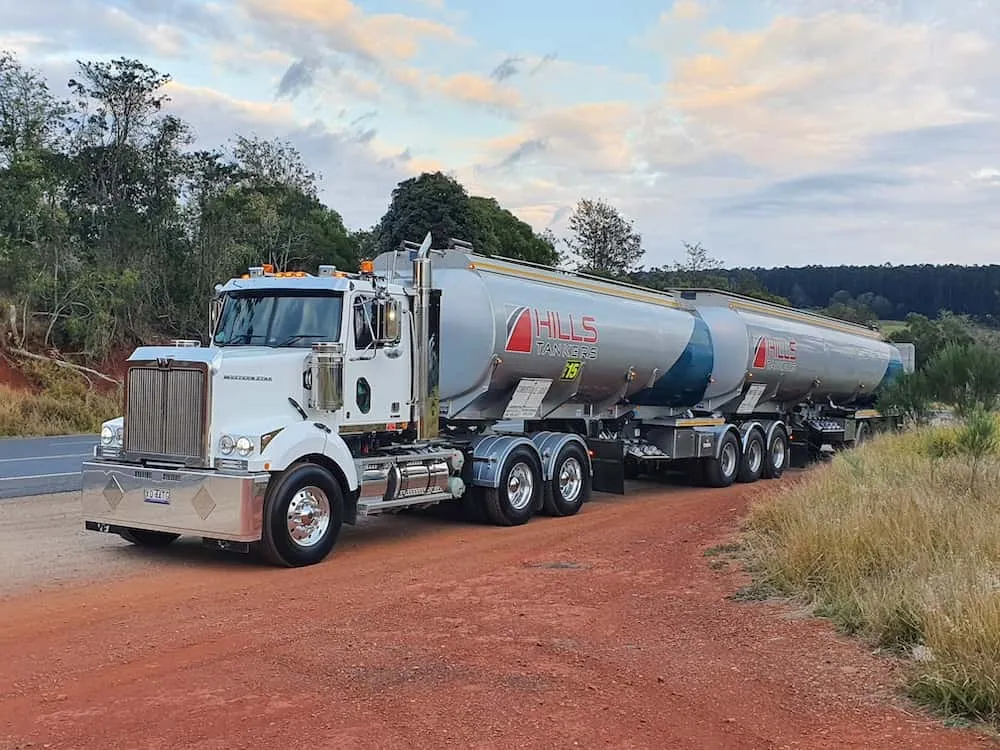
Home/Solutions/Dangerous goods
Dangerous goods transport
Petroleum, fuels and bulk dangerous liquids, carried under a safety system your compliance team can actually check: DG-licensed drivers, Chain of Responsibility discipline and an NHVAS-accredited safety management system, run by the same family since 1960.
NHVAS-accredited Safety Management System
Training, maintenance and safety, tracked in one system we run across the fleet.
MC and Dangerous Goods licensed
With BFM, Mass Management and Chain of Responsibility knowledge, and our own driver trainers behind them.
Family owned since 1960
Hills Tankers Pty Ltd, head office at Beresfield NSW, depots along the east coast to Adelaide.
Chain of Responsibility
Your name is on this freight too
Under Chain of Responsibility, road safety duties don't stop with the carrier. The business that consigns dangerous goods shares responsibility for what happens between loading and delivery, which is exactly why serious fuel and resource companies audit their carriers before a single litre moves.
We think that's how it should work. Our customers represent the major petroleum and resource companies in Australia, and their compliance teams don't take a carrier's word for anything. This page sets out what we run, so yours doesn't have to start from a blank sheet.
Anything here your team wants to dig into further, ask. Freight enquiries reach our operations team at Beresfield, and compliance questions land with the team led by our Chief Safety and Compliance Officer, Shaun Cavanough.
What an audit of Hills finds
- An NHVAS-accredited Safety Management System covering training, maintenance and safety
- Dangerous Goods licences and Safe Load Program accreditation as the driver hiring bar
- Basic Fatigue Management and Mass Management as standard driver credentials
- A Fatigue and Distraction Management program and a Cargo Risk Management program
- Real-time GPS tracking and dashcams across the fleet
- A fleet maintained by our own in-house maintenance team
Each of these is a program Hills Tankers runs and stands behind; we don't dress them up with certificates we don't hold.
The compliance spine
The programs behind every load
Six named programs, run day in and day out. Fuel doesn't forgive shortcuts, so there aren't any.
NHVAS-accredited safety system
Our Safety Management System is accredited under the National Heavy Vehicle Accreditation Scheme. It tracks driver training, vehicle maintenance and safety performance in one place, across every depot.
Chain of Responsibility
COR discipline runs through scheduling, loading, mass and driving hours, and every driver we put on the road is required to hold COR knowledge before they start.
Fatigue & Distraction Management
A dedicated program, on top of the Basic Fatigue Management credential our drivers are required to hold. Tired or distracted drivers and fuel tankers don't mix, so we manage both deliberately.
Cargo Risk Management
Dangerous goods add a second risk layer beyond the vehicle: the load itself. Our Cargo Risk Management program covers the product from loading through to delivery.
Real-time fleet monitoring
GPS tracking and dashcams run across the fleet, with real-time driver monitoring. If a customer asks where their product is, we answer from data, not guesswork.
In-house maintenance
Tankers are maintained by our own maintenance team rather than whoever's cheapest this quarter. See the fleet and maintenance setup.
DG-licensed drivers
What a Hills driver carries before they carry your freight
Dangerous goods work starts with the person holding the wheel. The credential bar below is published on every driver role we advertise, and it doesn't bend for a busy week.
Behind the licences sits screening and training: pre-employment medical, National Police Check and drug and alcohol screening on the way in, then our own training team, led by a Driver Trainer Lead with four full-time driver trainers, from induction onward.
Fuel experience is welcome but not assumed; drivers new to fuel are trained fully before they run solo. That's a training investment we make rather than a corner we cut.
| Credential | What it covers |
|---|---|
| MC (Multi-Combination) licence | The highest heavy vehicle licence class: B-Doubles, A-Doubles and road trains |
| Dangerous Goods (DG) licence | The licence to transport dangerous goods by road, fuel included |
| Safe Load Program (SLP) card | The petroleum industry's terminal loading accreditation, held or obtained before solo fuel work |
| Basic Fatigue Management (BFM) | Structured fatigue management of heavy vehicle driving hours |
| Mass Management | Loading to legal mass limits, every combination, every run |
| Chain of Responsibility knowledge | Understanding the shared duties along the whole supply chain |
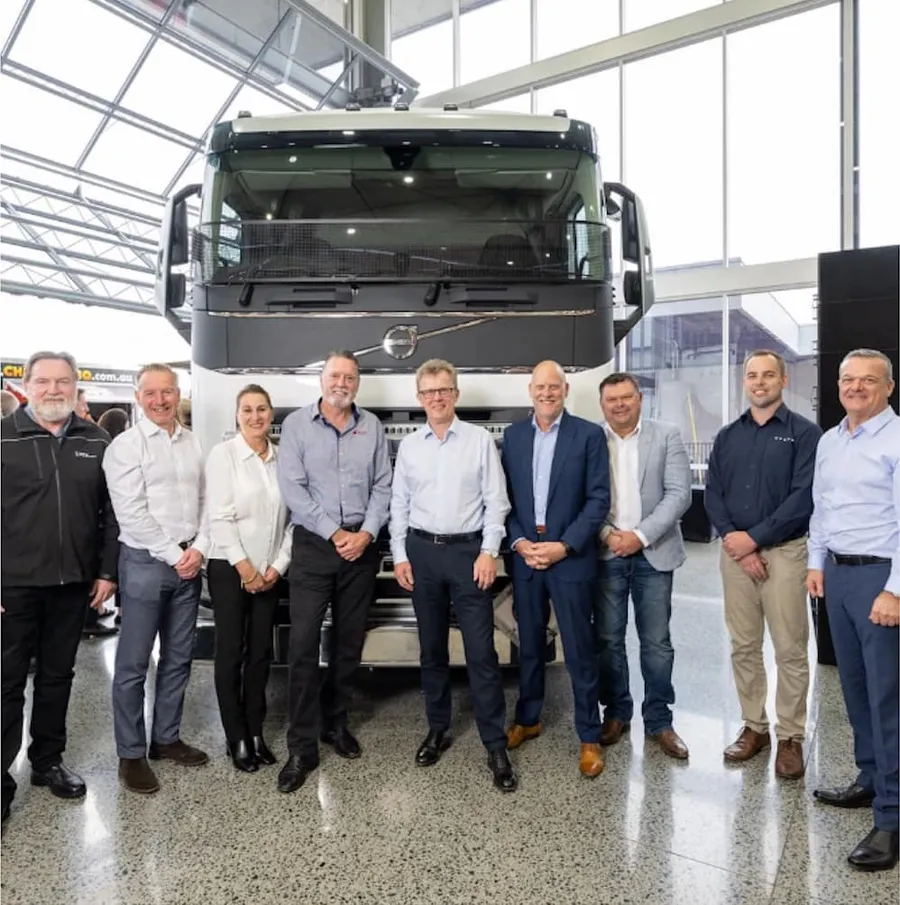
The safety system is people before it's paperwork.
Behind the wheel, behind the scenes
Who stands behind the driver
A driver on a fuel run is never operating alone. Our safety operation is run by a dedicated HSSE Manager with compliance and training teams behind them, alongside the driver trainers who take every new starter through.
Operations are led by our General Manager through a National Operations Manager, depot managers and a scheduling team working from the depots themselves, so the person planning a run knows the route, the site and the driver. And the trucks they dispatch are kept right by our own maintenance team: a Fleet Maintenance Manager, maintenance coordinators and full-time mechanics.
That structure is why the fleet can run everything from single semis to triple road trains into terminals, service stations and mine sites without drama. Drama is the thing this whole page is designed to prevent.
Quick answers
What compliance teams ask us
What dangerous goods do you carry?
Our specialty is bulk petroleum, fuels and dangerous liquids: the work this business has done since 1960. If your product sits outside that, ask us anyway; if it's not a load we should carry, we'll say so.
Where do you run?
From depots at Beresfield NSW (head office), Brisbane, Mackay, Townsville and Adelaide. From Townsville we service the east coast out to the NT border and Gulf Country.
What combinations can you put on a DG run?
Tri-axle semi-trailers, truck and quad-dog, 19m and 25m B-Doubles, 30m A-Doubles, and AB and Triple Road Trains. The fleet page has the full ladder.
Can our compliance team ask questions before we commit?
Yes, and we'd rather you did. Send your questions with a freight enquiry or call 02 4918 5888; compliance matters go to the team under our Chief Safety and Compliance Officer.
How do you track a load in transit?
GPS tracking runs across the fleet with real-time driver monitoring and dashcams, managed from the depots rather than a distant call centre.
What if something happens after hours?
For after-hours assistance, contact our Brisbane depot on 07 3860 9301. During business hours, your depot contact or head office on 02 4918 5888 is the first call.
Related solutions
Fuel & petroleum cartage
Bulk fuel to service stations, terminals and mine sites: the core trade since 1960.
Learn more →Bulk liquids
Non-fuel liquids cartage since 1985, keeping supply chains uninterrupted around the clock.
Learn more →Fleet & maintenance
The combinations ladder and the in-house maintenance team that keeps it roadworthy.
Learn more →Since 1960 · Family owned
Need something moved?
Tell us what needs carrying and where it has to go. The team at our Beresfield head office will come back to you with the right answer, not a runaround.